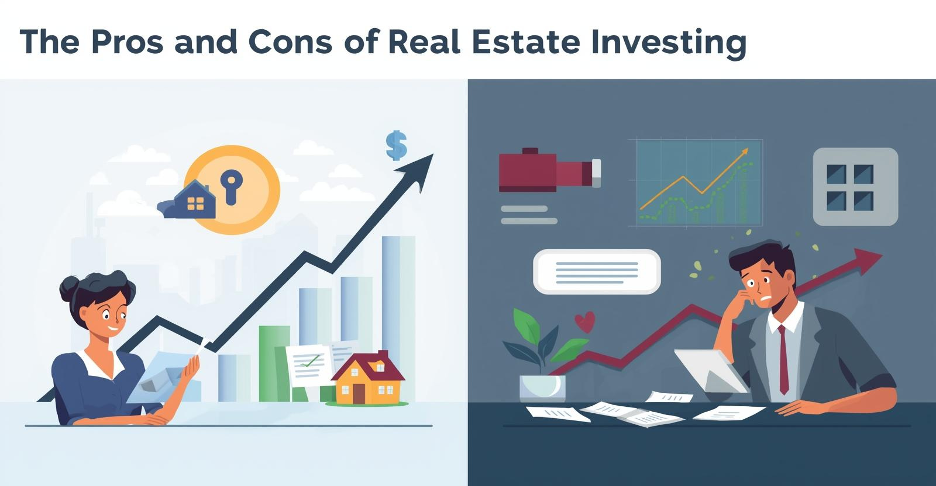
Real estate has long been considered one of the most reliable ways to build wealth. From rental properties and fix-and-flips to commercial buildings and short-term rentals, real estate offers a wide range of investment opportunities. However, like any investment, it comes with both advantages and drawbacks.
Before deciding whether real estate investing is right for you, it’s important to understand the full picture. Below is a balanced look at the key pros and cons of investing in real estate.
The Pros of Investing in Real Estate
1. Steady Cash Flow
One of the biggest advantages of real estate investing is the potential for consistent monthly cash flow. Rental properties can generate income that helps cover expenses and, over time, produces profit. As rents increase, your cash flow may grow while your mortgage payment stays the same.
2. Appreciation Over Time
Historically, real estate tends to appreciate in value over the long term. While markets can fluctuate, well-located properties often increase in value as demand grows, providing investors with equity and long-term wealth.
3. Leverage
Real estate allows you to use leverage, meaning you can control a high-value asset with a relatively small amount of capital. Using financing enables investors to amplify returns, as appreciation is based on the full value of the property, not just the cash invested.
4. Tax Advantages
Real estate investors can benefit from several tax advantages, including deductions for mortgage interest, property taxes, insurance, maintenance, and depreciation. These benefits can significantly reduce taxable income and improve overall returns.
5. Hedge Against Inflation
Real estate is often considered a hedge against inflation. As the cost of living rises, property values and rental rates tend to increase as well, helping preserve purchasing power and income.
6. Tangible Asset
Unlike stocks or cryptocurrencies, real estate is a physical, tangible asset. Many investors appreciate the security of owning something they can see, improve, and control.
The Cons of Investing in Real Estate
1. High Upfront Costs
Purchasing real estate typically requires a significant upfront investment, including a down payment, closing costs, inspections, and initial repairs. These costs can be a barrier for new investors.
2. Lack of Liquidity
Real estate is not a liquid investment. Selling a property can take months, depending on market conditions. If you need quick access to cash, real estate may not be the best option.
3. Ongoing Maintenance and Management
Owning property comes with responsibilities. Repairs, maintenance, tenant issues, and vacancies can take time, money, and energy. While property management companies can help, they reduce overall profits.
4. Market Risk
Real estate markets are influenced by economic conditions, interest rates, job growth, and local demand. Property values and rental income can decline during downturns, impacting returns.
5. Financing and Interest Rate Risk
Most investors rely on financing to purchase real estate. Rising interest rates can increase mortgage payments and reduce cash flow, while stricter lending standards can limit purchasing power.
6. Concentration Risk
Unlike diversified stock portfolios, many real estate investors hold a large portion of their wealth in one or two properties. This concentration can increase risk if a property underperforms or experiences unexpected issues.
Is Real Estate Investing Right for You?
Real estate investing can be a powerful wealth-building tool, but it’s not passive or risk-free. Success depends on your financial goals, risk tolerance, time commitment, and market knowledge. Investors who perform thorough due diligence, plan for expenses, and take a long-term approach are often best positioned for success.
If you’re considering investing in real estate, it’s wise to speak with a knowledgeable real estate professional, lender, and tax advisor to ensure your strategy aligns with your goals.
Final Thoughts
Real estate offers unique benefits like cash flow, appreciation, and tax advantages—but it also requires capital, patience, and active involvement. Understanding both the pros and cons will help you make informed decisions and build a strategy that supports long-term financial success.
If you’re thinking about investing in real estate or want help identifying opportunities, working with a local real estate expert can make all the difference.
Ready to Explore Real Estate Investing?
Whether you’re considering your first investment property or looking to expand your portfolio, having the right strategy and local insight is key to success.
👉 Schedule a free, no-obligation real estate investment consultation to:
- Evaluate your goals and budget
- Identify potential investment opportunities
- Understand cash flow, appreciation, and financing options
- Avoid common mistakes new investors make
Send me an email at jeremy.nault@verani.com to get started and see if real estate investing is the right move for you.